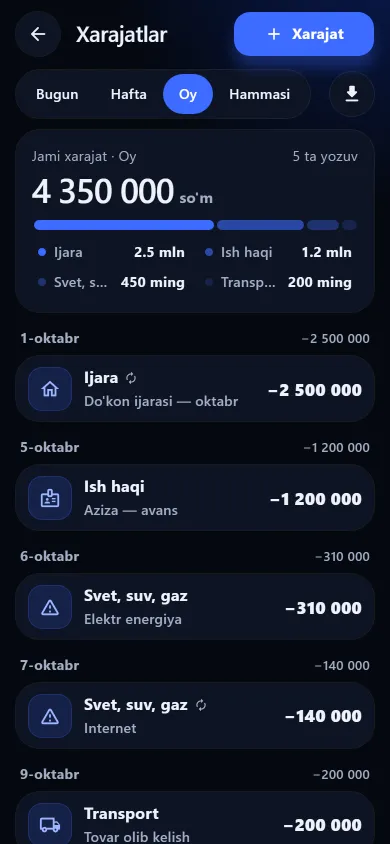
Buy at 10,000 and sell at 14,000 and the app shows 4,000 of profit. But rent, electricity and your seller’s wages come out of that same money. Record your expenses and the app subtracts them, leaving the real figure on screen: net profit.
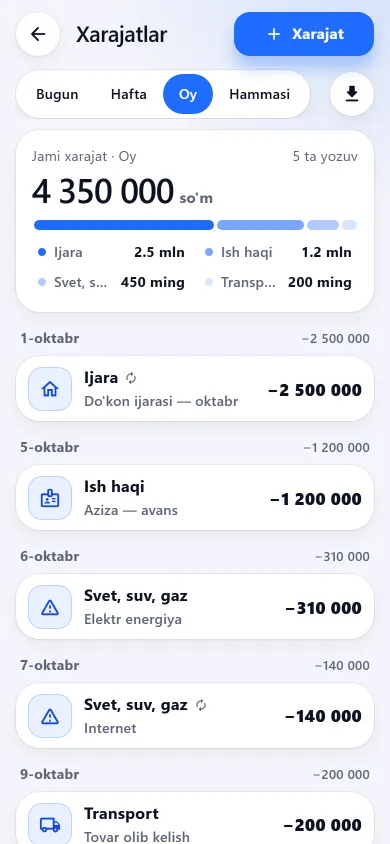
Rent, utilities, wages, transport, taxes and fees, advertising, repairs and other — each with its own icon. For anything not on the list, tap “I’ll type it” and enter a name; it keeps that name afterwards.
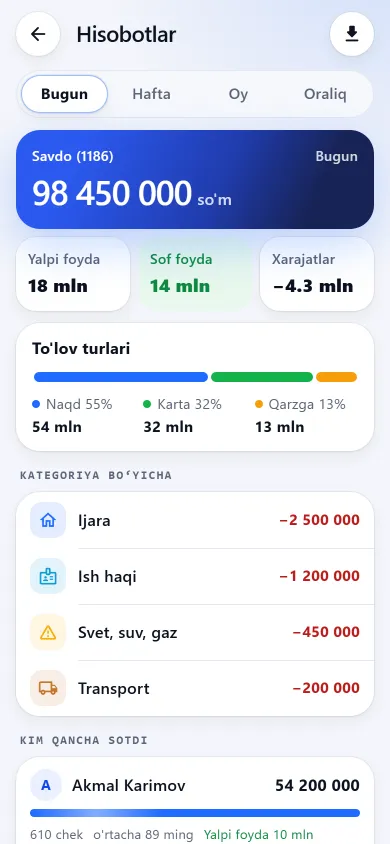
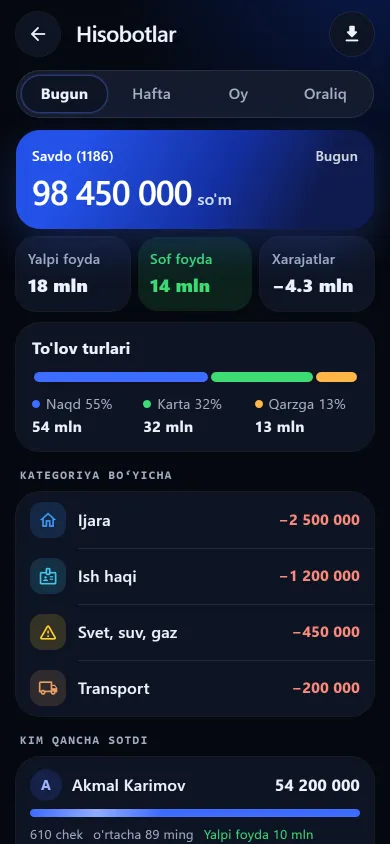
The split by category, net profit in the report and today’s picture on the home screen.

New design
Previous design
New design
Previous design
New design
Previous designThese screenshots come from a demo shop: the products, customers and amounts in them are invented. A real shop’s screen shows customer names and their debts, so we do not publish those. The screens themselves look exactly like this.
The report screen stacks three lines: gross profit (your markup), expenses and net profit. A negative net profit shows in red. Tapping the card or a category row opens the expenses section — the moment you think “profit looks thin” you can see where it went.
Type the amount (it groups itself as 120 000), pick a category and add a note or date if needed.
Net profit in the report updates at once; if there was an expense today the home screen switches to showing “Net profit” too.
The split by category: how much on rent, how much on transport. You can download it as a file and keep it.
We say it plainly up front, so there is no “but I thought it did that” later.
Yes — expenses are a separate permission, and the ready-made Cashier, Seller and Senior seller sets do not include it: the section is hidden and the request is refused server-side. One caveat: an employee with AI assistant access can ask it for totals by category — the AI tools are not yet filtered by this permission. If expenses must be fully closed off, do not grant AI access either.
Mark the entry “repeats monthly” and next month, while nothing is recorded in that category, a prompt appears at the top; the “Record for this month” button adds last month’s amount with today’s date in one tap. It does not record itself, but it will not be forgotten either.
Yes, if a shift is open. The expense is attached to that shift and deducted from the cash expected in the drawer (opening float + cash sales + debt repayments − cash refunds − expenses). Note: the payment method is not stored, so an expense paid by card also counts as leaving the drawer — you will see a difference and can explain it in the note when closing the shift.
Record it as an expense under wages so your net profit stays right. Staff KPIs work out the bonus amount, but do not post it to expenses by themselves.
Daily profit tracking: revenue, net profit, expenses and who sold what — today, last 7 or 30 days. Nightly Telegram summary if connected. 7 days free.
Learn more →Seller control in a shop: shift open and close, the cash difference, sales per employee, permissions that hide cost price — and what it does not do.
Learn more →BuySale pricing by shop type: from 6 630 UZS a day, 198 900 UZS per 30 days. 7 days free and no setup fee.
Learn more →Markup and margin calculator: the selling price from cost and a percentage, markup and margin from two prices, and how expenses eat into net profit.
Learn more →
7 days free, no payment card needed. Then from 6 630 UZS a day, depending on the shop type.
Start for freeBuySale assistant
Answers from what is published on this site
AI can make mistakes — check anything important via Telegram.
Writing an answer